Thursday, July 14, 2011

Mumbai terror attack may signal dangerous game


THE terror attacks in Mumbai on Wednesday are likely to end the recent thaw in India-Pakistan relations and Indian Prime Minister Manmohan Singh's hopes of a grand reconciliation in South Asia.

As yet no organisation has claimed responsibility but if elements within Pakistan's fractured establishment are linked to the attacks, it will suggest Islamabad, and particularly the army, is keen to prove it is not just an outpost for Washington in the region. Pakistan's demonstration of its autonomy, and the army's attempts at recovering its prestige through such dangerous tactical ploys, is also fraught with consequences for Afghanistan and the possibility of an early closure to the endgame being played in that country.

The attacks in Mumbai are the worst on Indian soil since the 2008 attacks on the same city that brought the financial capital of the country to a standstill for several days.

There is good evidence the 2008 attacks were carried out by members of the Lashkar-e-Toiba, a Pakistan-based terrorist organisation with strong links to Pakistan's main intelligence organisation, the Inter-Services Intelligence Directorate.

Even after 2008 the LET has continued to threaten India and it has deep links with the Indian mujahideen, who have carried out crude attacks in several parts of India.

The timing of the present attacks suggests Pakistan's military establishment is reasserting itself within the country and in terms of its most critical external relationships. Better relations with India have rarely been on the agenda of Pakistan's military, which owes its raison d'etre to hostility with India.

Indeed, the army and the ISI have grown into being an empire within a state precisely because of the enmity with India and are, therefore, deeply suspicious of a detente with India.

For nearly three years since the 2008 terrorist attacks, relations between the two hostile neighbours have remained fragile and have eased only because of the unprecedented diplomatic generosity of Singh, despite little domestic support.

India has been faced with a catch-22 situation. Almost all terrorist attacks in India, over the past two decades, have been supported or sponsored by Pakistan, and often -- there is good evidence to suggest -- by elements from within the establishment in Pakistan. And yet only by engaging and strengthening critical stakeholders in Pakistan, who are fighting the battle against extremism internally, will it become possible to reconstruct a moderate Pakistan that is a force for stability in the region.

Given that the foreign ministers of India and Pakistan were expected to meet in New Delhi towards the end of this month, and there was the possibility of a summit towards the end of the year, it was obviously critical for the terrorists and their supporters to strike now to ensure a deeply weakened Indian Prime Minister is unlikely to invest any further political capital in the relationship.

Moreover, Pakistan's military establishment has found its internal legitimacy floundering after the American attack on Abbottabad in which Osama bin Laden was killed.

The army has faced flak from civil society, from parliamentarians, and the generals have faced growing dissent from within the ranks of the armed forces in a country where anti-Americanism is widespread. Indeed almost every survey of public opinion suggests Barack Obama has less support than bin Laden in most parts of Pakistan.

In addition, Washington has recently suspended $800 million of military assistance to Pakistan. Clearly, Pakistan's army leadership is fighting a grave battle for its legitimacy and continued survival.

In a larger geo-political sense, the terrorist attacks in Mumbai follow the killing of Ahmed Wali Karzai, the powerful leader of Kandahar province in Afghanistan, and half-brother of President Hamid Karzai. It is widely believed the killing was carried out to ensure the chances of reconciliation in Afghanistan are further thwarted.

It is clear Pakistan's army has been subverting efforts at building a more inclusive governance structure in Afghanistan and also ensuring that any dialogue with the Taliban is channelled through the military headquarters in Rawalpindi.

In other words, there is evidence of a new deeply disturbing pattern that suggests Pakistan's army and ISI have embarked on an adventurous, dangerous course to regain their legitimacy domestically and their autonomy vis a vis Washington.

The attacks in Mumbai and Wali Karzai's assassination may the first signposts of what could be the beginning of a new great game in South Asia.


(Source: The Australian)

Monday, July 4, 2011

Prof. Mattoo in Berlin


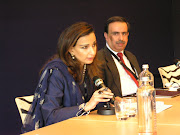
Prof. Mattoo, a member of the Governing Council of Pugwash, co-chaired the Plenary Session on Improving Relations Between India and Pakistan, at the recently concluded 59th Pugwash Conference on Science and World Affairs held at Berlin, Germany from 1-4 July 2011.


Here he is seen with Lt. Gen (retd) Talat Masood, Hon. Sherry Rehman, MP and former Interior Minister of Pakistan, Hon. Ahsan Iqbal Chaudhry, MP, Pakistan, Prof. Saifuddin Soz, MP Rajya Sabha and Hon. Syed Azeez Pasha, MP Rajya Sabha.

Saturday, June 18, 2011

Prof. Mattoo @ The Festival of Ideas, University of Melbourne


In the recently concluded Festival of Ideas 2011 organized by the University of Melbourne and supported by the Australia-India Institute, Prof. Mattoo chaired a session on India, Pakistan and Afghanistan. The panel included Dr. Christopher Snedden, Deakin University, Prof. Robin Jeffrey, National University of Singapore, Prof. Samina Yasmeen, The University of Western Australia and Ms Sally Neighbour from The Australian. The speakers debated, discussed, analyzed and contemplated on the key question: How can peace be assured between these conflicting national identities and states?

To watch the entire session, click on the link below:

http://live.unimelb.edu.au/episode/2011-festival-ideas-india-pakistan-and-afghanistan

Friday, June 3, 2011

Wait and watch, and suffer


Few incidents can exemplify the deep turmoil within Pakistan than the murder of the investigative reporter, Syed Saleem Shahzad. Part of a brave and often audacious community of journalists in Pakistan, Shahzad was targeted apparently because he exposed links between al-Qaeda and key parts of the Pakistani establishment, a nexus that has acquired a new salience since the killing of Osama bin Laden at Abbottabad. It is critical, at virtually this eleventh hour, that Pakistan’s people, and the world outside — the country’s friends and even foes — coalesce to forge a common agenda for the future of the country.

While the US Secretary of State, Hillary Clinton’s angst-ridden recent visit to Islamabad may suggest a new urgency, Washington’s policies continue to be driven by short-term considerations of political expediency, especially the need to secure the Pakistan army’s support to ensure an early exit out of Afghanistan. What is often not recognised is that today the second-largest Muslim State, with the fastest growing nuclear arsenal, is confronting the most serious challenge to its existence as a coherent nation-state probably since independence and certainly since Bangladesh separated from it in 1971.

Five fundamental questions, and the manner in which the people of Pakistan and their leaders respond to these almost-Manichean choices, will determine — to a large extent — the future of the country.

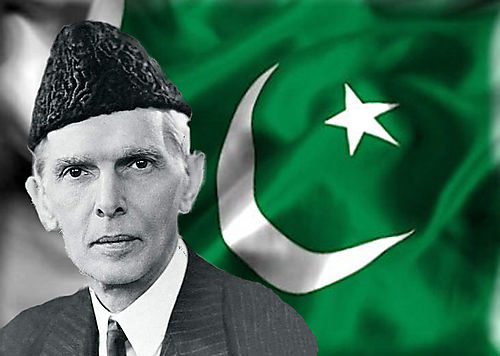
First, will the idea of Pakistan, as a nation-state, remain rooted in the world view of its founder Mohammed Ali Jinnah or will it continue to be driven by the ideology of the military dictator Zia-ul-Haq, who ruled the country from 1977 to 1988? Let us be clear that Jinnah demanded Pakistan as a home for the Muslim minority of the Indian subcontinent, but having secured a separate State wanted religion to become a private affair, with little role in public life. While we may quibble over Jinnah’s view on religion, there is no doubt that he had hoped that the country would become a modern and moderate Muslim State. In contrast, the deep Islamic radicalisation of parts of Pakistan, and its descent into extremism, is a product of Zia’s political machinations aided by the US and its allies during the Cold War.

Second, will Pakistan’s army seek to cement the fractured nation or will itself become a source of further splintering? Pakistan’s army has, for decades, been seen as the most professional, well integrated, disciplined, least corrupt and most powerful institution in the country. And yet today it is clear that it is the army and the Inter-Services Intelligence Directorate that has sponsored many of the militant groups that are deeply undermining the stability of Pakistan. It is the army again that has the strongest vested interest in continuing conflict with India; given that it is this rivalry that has allowed it to expand to a point where it’s become an empire within a State. In turn, the army’s credibility has been deeply eroded among the vast majority of the people. Will the army permanently disconnect itself from the jihadis and cleanse itself of radical subversive elements within its ranks or will it preside over Pakistan’s collapse into anarchy?

Third, will the relationship with the US be based on a convergence of long-term values and interests or will it continue to be based on tactical opportunism? No other external relationship has been as important to Pakistan as the relationship with the US. It is also one of the highest recipients of American aid. And yet there are few countries that are more unpopular in Pakistan than the US. Almost every survey of public opinion suggests that Barack Obama has less support than bin Laden in most parts of Pakistan. The belief that America treats Pakistan like a condom, to be used and discarded, is all pervasive and unless this traditionally patron-client relationship transforms itself, anti-Americanism will continue to inspire further radicalisation of the polity and the society.

Fourth, will there be a grand reconciliation with India or will the historical legacy of enmity over the past 60-odd years continue to dominate south Asia? If there is a silver bullet that could almost miraculously transform Pakistan, it would be reconciliation with India. The India-Pakistan relationship is, and has been, about almost everything that matters: history, memory, prejudice, territory, identity, religion, sovereignty, ideology, insecurity, trust, betrayal and much, much more. While India’s size and the scale of its economy has prevented the conflict with its western neighbour from clouding its future, Pakistan has been strangulated by the rivalry with a vast majority of its resources being spent on matching India’s considerable military prowess. Ironically, there is no prime minister more willing to make peace with Pakistan than India’s Manmohan Singh, even to the extent of making unilateral concessions, wherever needed to satisfy Pakistan’s hardliners. Will Pakistan grab this opportunity in its own self-interest?

Fifth, will the media, the judiciary and the institutions of civil society grow and expand their influence or will they be also squeezed into inertia? Pakistan’s greatest strength, in recent years, has been the growth of a robust and fiercely independent media, and its brave and often audacious NGO community (including a significant human rights and women’s movement). They have been the biggest bulwark against Pakistan’s otherwise imminent collapse into Talibanism. The influence exercised by these groups will be an important determinant of Pakistan’s future.

Pakistan’s friends must understand that its future will be primarily determined by the manner in which it addresses these questions, most of which have been plaguing it since its independence as a separate nation-state. And the best service they can do to help Pakistan is to make its leaders recognise not just the gravity of the crises that they are facing, but to ensure that they reflect on these questions and chart out a course based on an honest assessment of what is good for the country. The world, including India, can no longer afford to just wait and watch.

(Source: Hindustan Times)

Monday, May 30, 2011

Pakistan: What Lies Ahead?


Prof. Mattoo delivered the inaugural Tiffin Talk at the Australia India Institute, University of Melbourne. In his presentation he raised five important questions that Pakistan needs to address in order to come out of the current predicament it faces.

To listen to the podcast of his talk, click below...


Tiffin Talk Week 01 - Pakistan: What lies ahead? by mokshaweb

Saturday, April 16, 2011

Prof. Mattoo on India's self-perception as a rising power and the complexities within...


There are huge changes afoot in India and ABC Radio National’s Saturday Extra explores some of the challenges and opportunities for modern India. The country has many complex and entrenched problems, but some regard it as an emerging super power. But do Indians believe they can or should play a larger role in the international arena?

Prof. Mattoo gives his perspective on such questions and a host of other related queries, specially on the nature of India-Australia relations and the road ahead, in a conversation with Geraldine Doogue.

To listen to the interview, click on the following link…

http://mpegmedia.abc.net.au/rn/podcast/2011/04/sea_20110416_0805.mp3

Friday, March 11, 2011

Summer of Discontent


In the current issue of Harvard International Review on India in Transition- The State of the Subcontinent, Prof. Mattoo discusses what went wrong in Kashmir last summer and the steps that should be taken for lasting peace in the valley.

To read the article, click on the following link...

http://hir.harvard.edu/india-in-transition/summer-of-discontent