Tuesday, August 13, 2013

Unless India acts today, J&K will implode tomorrow

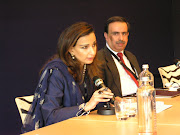
Kishtwar in Jammu and Kashmir remains on the edge, four days after the outbreak of communal violence that left three persons dead. Is a dangerous mix of religion and terror at work? Is one of the most sensitive regions in the country being polarised on religious lines? Prof. Mattoo joined IBNLive readers for an interaction on the issue. 


To read the transcript of the chat, click on the link below:

Tuesday, August 6, 2013

Seizing the opportunity

As co-chairs of the Chaophraya Dialogue between opinion makers from India and Pakistan, we are encouraged by reports of resumption of the official dialogue between Islamabad and New Delhi, and of a possible meeting between the two Prime Ministers on the sidelines of the U.N. General Assembly this September.
We believe, however, that it is also time for important gestures by the political leadership of the two countries to inject fresh momentum into the fragile peace process. An early visit to Pakistan by the Indian Prime Minister, Manmohan Singh, would be one such gesture. While such a visit should not be burdened with the expectation of a grand strategic bargain at this point, as many summits tend to be, it should signal the need for genuine reconciliation. Dr. Singh’s visit to Islamabad should then be followed by a summit between the two heads of government meeting in New Delhi.
Both visits can be preceded or followed by a meeting in Islamabad of the Indian External Affairs Minister with his Pakistani counterpart. This would provide space for confidence-building between the two countries and allow them to frame a working agenda for ongoing talks on a calendar of unresolved and upcoming issues. There is a small window of opportunity in bilateral relations — the leadership of the two countries must seize this opening.
The power of democracy
India prides itself as the world’s largest democracy, while the people of Pakistan recently affirmed their thumping support for democracy in the face of terrorist threats. An elected government has handed over power to a new one in Islamabad after a national election. A resumption of official visits at this historic moment would signal the triumph of democracy in the region.
Unlike in the past, there is consensus among most major political parties in Pakistan on the need for improving relations with India. The outgoing federal government in Islamabad which leads the parliamentary opposition today, the Pakistan People’s Party (PPP), is a strong proponent for talks. This gives Prime Minister Nawaz Sharif opportune space to consult other political parties (including the PPP, the Pakistan Tehreek-e-Insaf, the Awami National Party and the Muttahida Qaumi Movement) to forge a national consensus on the need for reconciliation with India, and the leadership of key parties in settling on a viable timeline of confidence building measures. To build support for an ongoing dialogue that pivots to peace, Dr. Singh must also lead an all-party leaders’ delegation to Pakistan. The principal opposition party in India, the Bharatiya Janata Party (BJP), will likely not oppose such a move. Some of the boldest initiatives towards building peace in the region were supported by Atal Bihari Vajpayee during his term as leader of the previous BJP-led coalition government.
Checking a drift
Indian concerns about the lack of progress regarding the trial in Pakistan of the perpetrators of the 26/11 terrorist attacks in Mumbai mirror worries in Pakistan over the lack of progress over several bilateral issues. Many issues seemed to have been agreed upon, yet have defied closure. Clearly, the current strategic stalemate has gone past its function of calming down post-crisis turbulence; instead, it has begun to reinforce a dangerous drift away from the will and momentum needed for peace.
The view that these issues should not stand in the way of sustained dialogue is widely shared among Track II interlocutors between India and Pakistan. In fact, last month, at the 12th round of the Chaophraya Dialogue which brought together parliamentarians, former government officials, generals, diplomats, academia and journalists from both our countries, the joint view was to press for moving away from the “pause” button and look for a new normal.
Moving forward
The menu for action forward on a reset does not need any reinvention. The recommendations from this round of the dialogue included the need to resume the back-channel dialogue on Kashmir; active, not pro forma, revival of the ministerial level India-Pakistan joint commission created in 1983, which should become a mandated official space for old and new problems to be cleared, such as visa, travel and communication, and the need for periodic dialogue between the two ministries of defence.
Leaps of faith have played a great role in building peace throughout history. Conservative and risk-averse bureaucracies have, however, systematically and deliberately underplayed the importance of such exchanges. After nearly 66 years of bilateral conflict, the resumption of dialogue at multiple levels, from the top to the joint secretary level, could have a tremendous impact on a region bracing for multiple transitions.
Islamabad has signalled more than once its interest in taking visits and negotiations forward. New Delhi has reciprocated but stopped short. It is time Dr. Singh moved away from the Cold War straitjacket India-Pakistan relations have fallen into, and infused a new sense of hope to the people of the subcontinent.
Survey
For real reconciliation between the people of both countries, gestures are critically important. Indeed, contrary to orthodox wisdom in India, unilateral overtures towards Pakistan need not be a political liability. The recent India Poll conducted jointly by the Australia India Institute and the Lowy Institute for International Policy revealed that while an overwhelming majority of Indians identify Pakistan as a threat, nearly 90 per cent agree that ordinary people in both countries want peace, and a similar number believe that a real improvement in relations requires courageous leadership in both countries. More important, nearly 80 per cent felt India should take the initiative in seeking peace with Pakistan.
The findings suggested that if Dr. Singh were to visit Pakistan and take the lead on a dialogue, he would have popular support at home.
We believe that the time has come for the political class in both countries to make important choices that will spur peace for both India and Pakistan.
- Co-authored with Sherry Rehman
(Source: The Hindu)


Sunday, August 4, 2013

Of three crucial elections and a withdrawal

The region is headed for either a phase of unprecedented violence and conflict, or the crises that we see unfolding could become an opportunity.


THE next 16 months will be critical for South Asia. We could see the region descend into chaos, or it could prove to be a turning point in the history of the region. Much will depend on the India-Pakistan dialogue and whether Prime Ministers Manmohan Singh and Nawaz Sharif are able to arrive at a modus vivendi when they meet in September on the sidelines of the meeting of the UN General Assembly.

Three critical elections and one withdrawal are slated to happen next year and they will all impact on the region decisively. The most inclusive and least controversial will be the Indian general election, sometime in the spring of 2014. It is all but certain that Narendra Modi will be the BJP’s prime ministerial candidate, and the election potentially the most polarising in India’s history. While there is a robust debate on the Gujarat model of development (particularly invigorated by the recent exchanges between Amartya Sen and Jagdish Bhagwati), few have any idea on what would be Modi’s foreign policy were he to become the Prime Minister.

Will the foreign policy be driven by primarily his economic agenda of accelerating growth, or will it propelled by a fierce nationalistic weltanschauung? Or will it be a combination thereof? How would a Modi government relate to India’s smaller neighbours, and what view would it take of Pakistan and Afghanistan? Clearly, Modi has made some pronouncements, and even written a letter to Dr Manmohan Singh on the Sir Creek dispute, where he said: “I would earnestly request you to stop this dialogue with Pakistan at once and Sir Creek should not be handed over to Pakistan.”

But there is a difference between being a Chief Minister of a state and being the Prime Minister of the Republic of India. Even the most hardline leaders have had their policies tempered after assuming power, and I have even heard many Pakistanis suggest that only a BJP Prime Minister, whose nationalism would not be in doubt, would be able to make peace with their country. Recall too Modi’s first public speech, after being elevated as the BJP’s election campaign committee chief at Madhopur in Punjab — on Shyama Prasad Mukherjee's death anniversary — where he invoked Atal Behari Vajpayee and talked about the need to heal Kashmir’s wounds.

The uncertainties of the region are compounded by the rather dark future of Afghanistan, which could witness a civil war even before the next election slated for April 2014 and before the withdrawal of the forces by NATO and other partner countries later next year. Afghanistan is being seen in zero-sum terms by India and Pakistan, and this could become a dangerous theatre for their rivalry. Even now the signs are ominous. The US is trying to cobble a deal with the Taliban with the assistance of Pakistan, while President Hamid Karzai views this, not without reason, as a plot to undermine him and sees India as probably his only remaining ally. And remember that Karzai, who is often vilified in the Pakistani and American media, is one of the shrewdest politicians that I have met, and may spring a surprise by hastening the withdrawal of the NATO forces before the elections and by implementing his own succession plan.

And finally we have the elections in Jammu and Kashmir towards the end of 2014. There is no doubt in my mind that these elections too will be a turning point. The bleak scenario is of increased militancy aided by an unstable Pakistan, a chaotic Afghanistan and increasingly alienated young people of the state, in which the elections are reduced to a farce with no one outside the mainstream participating and with a very low voter turnout. The state could then witness another decade or so of grave violent conflict. Or the elections could become the most inclusive in the history of the state and lead to enduring peace and stability.

In sum, the region is headed for either a phase of unprecedented violence and conflict or the crises that we see unfolding could become an opportunity. If the latter is what we want to see, it is critical for New Delhi and Islamabad to immediately resume the official dialogue, and strengthen the back channel through the two designated interlocutors: Shayryar Khan and Satish Lambha. This dialogue must include sustained discussions on the future of Afghanistan. In addition, as the Chaophraya Track II dialogue recommended recently, it is important to revive the ministerial level India-Pakistan joint commission created in 1983; and there is urgent need for a dialogue between the two Ministries of Defence with adequate military representation.

Simultaneously, there is critical need to address the continuing trust deficit between the people of Jammu and Kashmir and New Delhi. Not through tactical diversionary measures, but through substantive peace-building measures. Indeed, if and when they meet in New York, the two Prime Ministers must recognise that any further drift in bilateral relations will be dangerous for the future of the entire region.

(Source: The Tribune)

Thursday, August 1, 2013

The Story of Telegana: Why India Needs Smaller States

Despite protests, India is right to create smaller states like the new state of Telegana. Speaking on ABC Radio National, Professor Mattoo said the decision to carve out a new state of Telegana from the southern state of Andhra Pradesh could be seen as a political maneuver by India’s ruling Congress Party to win votes in areas that would come under the new state. However, he told Radio National’s Waleed Aly that the principle that smaller states can be better managed than massive ones is a sound one.

You can hear Professor Mattoo’s views on the issue on ABC Radio National’s website at: 

Sunday, May 19, 2013

How the world looks from India


The Government of India may have rolled out the red carpet for Chinese Premier Li Keqiang, who arrived in New Delhi yesterday, but popular opinion in India is deeply sceptical of Chinese ambitions in Asia and its policy towards India. This is the clear verdict of arguably the most comprehensive survey of Indian public opinion in recent years. But while there is great warmth for the United States, and discomfort at China’s rise, the percentage of Indians who believe India should cooperate with China at the global level equals those who support plans to contain China. India Poll 2013, the findings of which are being released today, was carried out late last year, much before last month’s incursion by Chinese troops in Ladakh.
Predictably, there continues to be deep concern within India about possible terrorist attacks from Pakistan as well as the motives of the Pakistan Army, but a courageous, reconciliatory move towards Islamabad by the Indian Prime Minister would invite widespread domestic support.
India Poll 2013: Facing the Future is a survey of opinion of 1,233 adults, a representative cross-section of Indians from all sectors of society; interviews were conducted face-to-face in India between August 30 and October 15, 2012. The poll was commissioned by the Australia India Institute at the University of Melbourne and the Lowy Institute for International Policy, and the fieldwork conducted by a reputable international polling company.
China and threat factors
Not surprisingly, Indians see Pakistan and China as the biggest foreign threats to their nation. Only nine per cent of Indians believe China does not pose a threat, while 84 per cent believe it does, with 60 per cent identifying it as a major threat. Seventy per cent of the respondents agreed that China’s aim is to dominate Asia. The responses were roughly equal, however, between those who believed that India should join with other countries to limit China’s influence (65 per cent), and those who believed India should cooperate with China to play a leading role in the world together (64 per cent). In fact, some Indians clearly hold both views at once, an interesting sign of the tensions or indeed duality within Indian foreign policy expectations.
From all those who had identified China as a threat, over 80 per cent agreed that threat was for the following reasons: China possesses nuclear weapons, it was competing with India for resources in other countries, it was strengthening its relations with other countries in the Indian Ocean Region, and it was claiming sovereignty on parts of India’s territory. Only a slightly smaller number believed that the threat was because of China’s stronger military, its bigger economy, its military assistance to Pakistan, and because it does not “show respect” to India.
On a scale
This does not mean, however, that Indians do not want better relations with China; 63 per cent of the respondents want bilateral ties to be stronger. On a scale of 0 to 100, in terms of feelings towards a country (with 100 meaning very warm, and 0 very cold) of the 22 countries listed, China ranked right in the middle along with Brazil, at 44 degrees; the United States, Singapore, Japan, Australia, France, Nepal, Russia, Great Britain, Sri Lanka and South Africa ranked higher.
While the findings may suggest a schizophrenic Indian attitude towards China, the message is relatively straightforward. Indians are deeply apprehensive about what they perceive as China’s assertive or even aggressive attitude towards India, fearful of its policies in the region and anxious of its growing capabilities. And yet, while Indians generally hope that relations with China will become better and with little ill feeling towards the Chinese people, there is a lack of clarity on how India should respond to a Rising China. Should India partner with China to create a united front among Asia’s rising giants, if possible? Or be part of a balancing coalition to ensure that China’s rise remains peaceful and not destabilising at a time when there are widespread concerns that Beijing is aspiring for a dominant role in Asia? It is this policy dilemma which New Delhi needs to resolve. Likewise, Chinese diplomacy clearly faces a major challenge in terms of Indian public perceptions.
Pakistan
On Pakistan, the findings are along predictable lines, but with a significant counter-intuitive finding. Ninety-four per cent of Indians believe Pakistan is a threat, of which 78 per cent consider it a major threat. Of all those who identified Pakistan as a threat, over 90 per cent did so because of the possibility of terrorist attacks from Pakistan, the Pakistan military’s animosity to India, its possession of nuclear weapons, and because it claims sovereignty over Jammu and Kashmir. Pakistan ranks lowest in terms of warmth of feeling in the list of 22 countries.
And yet, despite great scepticism about Pakistan, 89 per cent of Indians agree that ordinary people in both India and Pakistan want peace. Eighty-seven per cent agreed that a big improvement in India-Pakistan relations requires courageous leadership in both countries and 76 per cent felt that India should take the initiative in seeking peace with Pakistan. Seventy-two per cent felt that trade and economic cooperation would bring peace between the two countries, while 67 per cent felt that without an agreement on Kashmir, peace would not be possible
In sum, the findings suggest that if Prime Minister Manmohan Singh were to have a summit meeting with Prime Minister Nawaz Sharif, and take the lead on a dialogue with Pakistan, he would have popular support. While a grand reconciliation with Pakistan had been central to Dr. Singh’s vision of South Asia, he seems to have abandoned the goal for fear of a political backlash. India Poll 2013indicates that even in the last year of the present government, peace with Pakistan is an opportunity worth pursuing.
Ties with U.S.
At 62 degrees, Indians feel most warmly towards the U.S. in the list of 22 countries surveyed. Eighty-three per cent feel that India’s relations with the U.S. are strong, while only four per cent think they are weak, 75 per cent want them even stronger and only one per cent want them weaker.
During most of the Cold War and beyond, suspicion of America was a striking feature of Indian, particularly elite, opinion, even while the U.S. became a “land of opportunity” for Indian professionals. American sanctions after the 1998 nuclear tests further compounded this feeling. In January 2009, however, after the U.S.-India nuclear deal, Manmohan Singh surprised many by telling President George W. Bush: “The people of India deeply love you.” India Poll 2013 confirms the affection the people of India have for the United States, if not for a single President.
-Co-written with Rory Medcalf
Source: The Hindu

Sunday, May 12, 2013

I found my place in Tihar Jail


Thirty years ago, in May 1983, I spent nearly 10 days at Delhi’s Tihar jail for the first and, till now, the only time in my life. With me were several hundred young men and women, many of whom are today leaders across the globe: including diplomats, professors, Members of Parliament, scientists, and editors. The Tihar experience was transformational. My daughter’s school in Melbourne advertises itself to current and potential students with a pithy slogan: “I found my place in Methodist Ladies College.” Thirty years later, I can rightfully say: I found my place in Tihar jail!

I was 20, at New Delhi’s Jawaharlal Nehru University studying for a Masters in International Studies. Like hundreds of others, JNU was our first exposure to the “real” India. JNU had a comprehensive policy of affirmative action that allowed students from all over India to be admitted, especially those who came from socially or economically challenged backgrounds. Deprivation Points, they were called, in an age of less politically correct vocabulary. Even those like me, who came from relatively affluent backgrounds, had a better chance of getting in because I came from Srinagar, cocooned in the Kashmir valley, and not from a public school in an urban metropolis.

Imagine then a university campus in the early 1980s, almost in the centre of New Delhi, inhabiting thousands of acres of land within the folds of the oldest mountain ranges in India: the Aravallis (and its beautifully wild flora and fauna), with just a few thousand students drawn from virtually the length and breadth of India, and with very little in common except a thirst for knowledge and for change. And almost completely isolated from the city and the world outside. A recipe for disaster, you might say, a Lord of the Flies in-the-making. And yet the outcome was anything but dysfunctional.

As Pushpesh Pant, one of our most inspiring teachers, was to later write:
“Excitement was palpable and infectious in the air. The milieu was open, hierarchies were abhorred and the team at the helm was a perfect one. Handpicked bright youngsters were invited to join interdisciplinary departments and the semester system adopted was refreshingly different from the end of the term all-important exams guaranteed to stifle originality and cripple the spirit.”

And much of the idealism of the faculty — the quest for excellence blended with social relevance — was transmitted to the students, who believed that they could change the world: democratically, non-violently and together. This was post-Emergency India, and even though Indira Gandhi had returned as Prime Minister, the power of ideas and the power of the people seemed unstoppable. The nights were long: as General Body Meetings flowed into informal discussions over endless cups of chai at Ganga or Nilgiri dhabha on issues that really mattered: Was there really an “epistemological rupture” in Marx’s thought? Did Utsa Patnaik get the “mode of production” debate right or was it Jairus Banaji, and, in any case, wasn’t he the only Indian who really understood Marxism? Wasn’t John Rawls just a liberal reactionary thinker? And could anyone really understand Gayatri Spivak, and did Deconstruction really matter?

Everyone who had a heart fell in love, and out of it, over readings of the romantic-revolutionary poet Pablo Neruda at Parthasarthy Rock, or singing Sahir’s songs from Pyasa.Student violence was unknown, gender sensitivity was an absolute axiom with women confident to walk alone at any time of the day or night.

The Soviet Union had intervened in Afghanistan but the walls mostly said “Down with American Imperialism”. The National Students Union of India (the student wing of the Congress) and the Akhil Bharitya Vidyarthi Parishad (affiliated to the RSS) had barely a presence, although the Students Federation of India (SFI) and the All India Students Federation (AISF) — student wings of the CPI (M) and the CPI — had suffered a major jolt with the Lohiaite Samata Yuvajan Sabha (SYS) and the Free Thinkers winning the 1982 elections. “Study and Struggle”, was the guiding mantra even for non-Marxists, with everyone being reminding constantly: “If politics decides your future, you must decide what your politics should be.”

But the days were too short! Almost everything changed in 1983. The journey to Tihar began as a protest by students at a perceived injustice, but transformed into an aggressive movement which led to an unprecedented divide between the faculty and the student body. Everyone has his or her version of 1983, much like Kurosowa’s Rashomon. And you can trivialise it or philosophise it, but you cannot easily forget those days in Delhi’s scorching summer. A student had been suspended from the hostel without a proper inquiry; the students’ union restored the room to him, after breaking the “official” lock. Two of the office bearers were rusticated, as a consequence. The “inhumane” gherao of the Vice Chancellor and the Rector that followed was difficult to justify. But when the police entered campus on that fateful night, the ceremony of innocence, as they say, was truly drowned. JNU was no longer the sanctuary where every idea, every thought, every identity could find a place.

We thought we were voluntarily “courting arrest” as a symbol of protest, and believed totally in the righteousness of our cause, only to wake up next morning in the jail to the news that we were charged for “attempt to murder” and “rioting” by a Delhi government wanting to “clean up” the campus of “romantic revolutionaries”.

The experience of Tihar was itself life-changing. It was as much about recognising the virtues of idealism, as well as its limits. About recognising the importance of freedom, as well as its limits. About recognising the power of the Indian state, and the limits of resistance. And, above all, about how confinement can, initially, cripple you psychologically, but once the initial distress has been overcome, it can be truly liberating and can help you to come to terms with your inner self. We were all bailed out, the charges dropped in a few years, and most of us went on to return to our petit bourgeois world of careers, and families and ambition. But who could ever forget May 1983? You can take me out of Tihar, but not the Tihar out of me.

(Source: The Hindu)

Tuesday, April 16, 2013

New poll finds Australia well liked in India - Prof. Mattoo's take on the poll in this ABC Radio National interview


The spate of violent attacks on Indian students in 2009 and 2010 greatly affected Australia's reputation in India at the time.
Since then, efforts have been made by government, tourist and cultural bodies to repair the damage, and some new research appears to show it's having an effect.
The India-Australia Poll, a collaboration between the Lowy Institute and the Australia-India Institute, surveyed over 1200 Indian adults and found that despite bad press over student issues, Australia is well liked in India.

Prof. Mattoo speaks to ABC Radio National's Fran Kelly about the crucial findings of this ground breaking poll. To listen in, click on the link below: