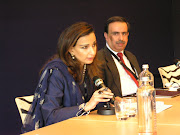
Greater Kashmir Magazine talk to Prof. Mattoo at length about the present situation in Kashmir and the possibilities of change. The excerpts:

As a long-time observer of Kashmir, how do you view the situation in Kashmir right now, post 2010 unrest?
Kashmir most certainly appears calm on the surface. There are a large number of tourists in the valley, educational institutions are running without disruptions, and regular day-to-day life seems to be proceeding normally for most ordinary Kashmiris. There is a renewed focus on basic issues of governance; your paper, for instance, brought out the scandalous state of health services in the state.
But anyone who has lived in the Kashmir or observed it closely for some time will recognise that it is a tinderbox, and could be in flames at the slightest provocation and the surface calm would vaporise in an instant. And for real and durable peace you have to address the deeper issues, the conflicts, and ensure that there is not just resolution, but real justice. After all, families of those who were killed will not forget their anger & hurt in a hurry or forgive the perpetrators until they see that justice is done. And, of course, all this has to be contextualised within the larger political dimensions of the problem
You have been a part of Track II diplomacy on Kashmir in the past. New Delhi had last year initiated the process of interlocution on Kashmir. Recently the interlocutors came up with their report, which evoked mixed reaction from separatists and mainstream parties in JK. What are your reflections on it?
I will be totally candid. I think it was a farcical exercise. The interlocutors have not managed to reach out to important dissident segments in Kashmir, the Report has not produced any sort of consensus in J&K or in New Delhi, and its impact is not likely to be felt in ‘grand’ political terms. This report, at best, is an academic exercise of little policy consequence. The fact is that there already exist valuable documents and reports, which have, in greater detail, explained the possible trajectories for building peace in the state. It was not yet another document that we needed to resolve the multiple conflicts in the state, but a genuine political process of reconciliation between the people of the state and New Delhi. Many dissidents from the state opposed this panel of interlocutors because they believed that the group did not have the mandate to negotiate peace, and that this was merely a diversionary tactic to buy time. One and half years later, they stand vindicated.
Do you think we should have had politicians as interlocutors?
Ever since September 25, 2010, when the Cabinet Committee on Security (CCS) finalised the eight point political initiative on Jammu and Kashmir, at the height of the crises in the valley, when over 100 persons had been killed, expectations were raised that a seasoned politician would lead the panel of interlocutors. This perception was built on the successful all-party delegation that had visited the state. The announcement of a three-member non-political team provoked widespread anger and hostility and even invited ridicule. Although the three members were undoubtedly professionals, who had excelled in their respective fields, the impression was created that the panel had been finalised without due diligence or a serious application of mind by those who are quite oblivious to the complexities of the problems in the state and were insensitive to the sentiment of the people living there.
In J&K, symbolism is almost as important as substance. Consider the history of the last half a century. Almost every political crisis and political agreement has been possible through initiatives led by heavyweights and backed by the political leadership of the country.
It was Lal Bahadur Shastri who was deputed by Prime Minister Jawaharlal Nehru in 1963 to help defuse the crisis following the theft of the Prophet's relic. While the chief of Intelligence Bureau B N Mullik also played a vital role and enjoyed Nehru's confidence, it was Shastri who was the public face of the initiative.
The 1974 Kashmir accord was possible because of the confidence that G Parthasarthi enjoyed of then Prime Minster Indira Gandhi. Similarly, in the 1990s, interlocutors like Rajesh Pilot and George Fernandes were able to make a difference because they created a perception that they were leading a serious political initiative backed by the highest political authority in the land. Indeed even the mandate of the panel of interlocutors had been defined in the most non-anodyne terms: "The three interlocutors appointed by the Govt. have been entrusted with the responsibility of undertaking a sustained dialogue with the people of Jammu & Kashmir to understand their problems and chart a course for the future.”
The separatist leaders categorically refused to talk to interlocutors till the situation improved in Kashmir. Geelani put forth five-point formula for peace to return in Kashmir while Mirwaiz Umar Farooq gave his four-point proposal? Should New Delhi accede to the proposals at any point in time?
New Delhi should take all proposals into consideration and speed up the dialogue process with all shades of opinion at the earliest. The separatists should also demonstrate some flexibility and shun their refusal to talk unless all their demands have been met. If there is a genuine desire by all stakeholders to move towards a political solution, there must be some room for compromise.
What in your opinion would help bring the separatist on board?Some flexibility by Delhi to at least put some of their demands on the table for discussion. Assurance that dialogue would be unconditional, uninterrupted and uninterruptible even if local and regional conditions were to change. The trust deficit that exists must be reduced by letting political leaders engage the separatists rather than officers from the intelligence agencies, who have traditionally played this role. The people of Kashmir have suffered and been traumatized over the last decades and lived in uncertainty for the last six decades. Clarity of thinking is not easy in these times, but it is critical to move forward. The reality is that the people must look for pragmatic ways to ensure the honour, dignity and the empowerment of the people in this globalised world. And they must give dialogue and peace a chance. There is an India beyond bunkers, security forces and corrupt and corrupted politicians. It is the vibrant India of entrepreneurs, professionals, activists, civil society activists and the robust and free media, among others. More and more Kashmiris must discover this India and build a coalition with it. That is the best guarantee against the other India which we witness in the Valley.
At least 117 people were killed in 2010 unrest in action by police and paramilitary forces? Justice still eludes the victims of the families? Why so?Unfortunately, the judicial process in the entire subcontinent is a lengthy and cumbersome affair. But given the hurt and anger that these killings have caused, and given that most were innocent young persons, we need to have a fast track mechanism to deliver justice.
I hope progress will be made soon so that the families of the victims can feel some relief; otherwise the faith of the average Kashmiri in New Delhi will be further eroded. Remember the one ordinary Kashmiri who confronted the Union home minister with a simple question at the height of the 2010 crises: “If we are citizens of India, why are you spraying bullets on us?” And another who asked: “If you say Kashmir is atoot ang of India, then why are you putting your own ang into the frying pan?
At one point in time, in 2010 unrest, New Delhi pointed to “governance deficit” in Jammu and Kashmir? Do you feel a lot more needs be done vis-à-vis good governance?
Yes, most definitely. There are complaints not only from all rural but also from most urban areas about a huge governance deficit. The visible absence of major development initiatives everywhere is a big disappointment. Moreover, the lack of empowerment of Panches and Sarpanches is a major cause for concern. Devolution of powers to the grassroots level most certainly could help improve the situation in rural areas. Similarly, elections to municipal bodies are long overdue and should be held at the earliest so that urban grievances can be resolved locally. This is not criticising any one government, but the entire system which is still patterned as a colonial instrument of “ruling” rather than “serving”.
What are your views on the recurring debate on the revocation of the AFSPA? The Army doesn’t agree to the proposition while the state is hardly able to do anything?
If the state continues to be peaceful in most areas, obviously there should be a revision of security measures established to only control conflict. In the meantime, all forces must be vigilant so that any past mistakes are not repeated in the future. The footprint of security forces in civilian areas must continue to be reduced. To that end, the removal of bunkers from several areas in Srinagar is a good beginning.
Are, at this point in time, any back channels on vis-à-vis New Delhi and separatists?
Having been in Australia for the past year, I have not been privy to these discussions, if there are any.
As an academic, what are your views on the educational system in JK?
The youth of the State can become its greatest strength, its soft power. Investing in the right kind of education, training and skill development have therefore to be part of the fundamentals of the government if it has to take advantage of the huge demographic dividend. It is vital that the gross enrolment ratio in higher education rises to at least 15 per cent in the next 10 years. This calls for a massive expansion in education: more universities, more off-site campuses, more colleges, more Industrial Training Institutes and more polytechnics that extensively use the revolutionary new instruments of Information and Communication Technology to deliver world-class course-ware.
Public-private partnerships are also needed to enhance international connectivity by extending broadband access in the state — with stronger incentives provided through the existing universal access funds for telecommunications. Given the geography of the state, and its growing endowments of skills, electronic exports of services may play a more significant role in its beneficial economic integration than the export of apples and handicrafts.
The State government must consider building a knowledge city where there is a seamless transition from studying to training to working within the same geographical space. The Dubai Knowledge village is one, but it is not the only example. The raison d’être was a long-term economic strategy to develop the region’s talent pool and accelerate its transition into a knowledge-based economy. The benefits for partners include 100 per cent foreign ownership, 100 per cent exemption from taxes, 100 per cent repatriation of assets and profits, and effortless visa issuance. Imagine a knowledge city in a valley on the foothills of the Himalayas where potentially the best and the brightest young men and women from all over the region can come and study, live and work together in a setting that offers world-class infrastructure.

As a long-time observer of Kashmir, how do you view the situation in Kashmir right now, post 2010 unrest?
Kashmir most certainly appears calm on the surface. There are a large number of tourists in the valley, educational institutions are running without disruptions, and regular day-to-day life seems to be proceeding normally for most ordinary Kashmiris. There is a renewed focus on basic issues of governance; your paper, for instance, brought out the scandalous state of health services in the state.
But anyone who has lived in the Kashmir or observed it closely for some time will recognise that it is a tinderbox, and could be in flames at the slightest provocation and the surface calm would vaporise in an instant. And for real and durable peace you have to address the deeper issues, the conflicts, and ensure that there is not just resolution, but real justice. After all, families of those who were killed will not forget their anger & hurt in a hurry or forgive the perpetrators until they see that justice is done. And, of course, all this has to be contextualised within the larger political dimensions of the problem
You have been a part of Track II diplomacy on Kashmir in the past. New Delhi had last year initiated the process of interlocution on Kashmir. Recently the interlocutors came up with their report, which evoked mixed reaction from separatists and mainstream parties in JK. What are your reflections on it?
I will be totally candid. I think it was a farcical exercise. The interlocutors have not managed to reach out to important dissident segments in Kashmir, the Report has not produced any sort of consensus in J&K or in New Delhi, and its impact is not likely to be felt in ‘grand’ political terms. This report, at best, is an academic exercise of little policy consequence. The fact is that there already exist valuable documents and reports, which have, in greater detail, explained the possible trajectories for building peace in the state. It was not yet another document that we needed to resolve the multiple conflicts in the state, but a genuine political process of reconciliation between the people of the state and New Delhi. Many dissidents from the state opposed this panel of interlocutors because they believed that the group did not have the mandate to negotiate peace, and that this was merely a diversionary tactic to buy time. One and half years later, they stand vindicated.
Do you think we should have had politicians as interlocutors?
Ever since September 25, 2010, when the Cabinet Committee on Security (CCS) finalised the eight point political initiative on Jammu and Kashmir, at the height of the crises in the valley, when over 100 persons had been killed, expectations were raised that a seasoned politician would lead the panel of interlocutors. This perception was built on the successful all-party delegation that had visited the state. The announcement of a three-member non-political team provoked widespread anger and hostility and even invited ridicule. Although the three members were undoubtedly professionals, who had excelled in their respective fields, the impression was created that the panel had been finalised without due diligence or a serious application of mind by those who are quite oblivious to the complexities of the problems in the state and were insensitive to the sentiment of the people living there.
In J&K, symbolism is almost as important as substance. Consider the history of the last half a century. Almost every political crisis and political agreement has been possible through initiatives led by heavyweights and backed by the political leadership of the country.
It was Lal Bahadur Shastri who was deputed by Prime Minister Jawaharlal Nehru in 1963 to help defuse the crisis following the theft of the Prophet's relic. While the chief of Intelligence Bureau B N Mullik also played a vital role and enjoyed Nehru's confidence, it was Shastri who was the public face of the initiative.
The 1974 Kashmir accord was possible because of the confidence that G Parthasarthi enjoyed of then Prime Minster Indira Gandhi. Similarly, in the 1990s, interlocutors like Rajesh Pilot and George Fernandes were able to make a difference because they created a perception that they were leading a serious political initiative backed by the highest political authority in the land. Indeed even the mandate of the panel of interlocutors had been defined in the most non-anodyne terms: "The three interlocutors appointed by the Govt. have been entrusted with the responsibility of undertaking a sustained dialogue with the people of Jammu & Kashmir to understand their problems and chart a course for the future.”
The separatist leaders categorically refused to talk to interlocutors till the situation improved in Kashmir. Geelani put forth five-point formula for peace to return in Kashmir while Mirwaiz Umar Farooq gave his four-point proposal? Should New Delhi accede to the proposals at any point in time?
New Delhi should take all proposals into consideration and speed up the dialogue process with all shades of opinion at the earliest. The separatists should also demonstrate some flexibility and shun their refusal to talk unless all their demands have been met. If there is a genuine desire by all stakeholders to move towards a political solution, there must be some room for compromise.
What in your opinion would help bring the separatist on board?Some flexibility by Delhi to at least put some of their demands on the table for discussion. Assurance that dialogue would be unconditional, uninterrupted and uninterruptible even if local and regional conditions were to change. The trust deficit that exists must be reduced by letting political leaders engage the separatists rather than officers from the intelligence agencies, who have traditionally played this role. The people of Kashmir have suffered and been traumatized over the last decades and lived in uncertainty for the last six decades. Clarity of thinking is not easy in these times, but it is critical to move forward. The reality is that the people must look for pragmatic ways to ensure the honour, dignity and the empowerment of the people in this globalised world. And they must give dialogue and peace a chance. There is an India beyond bunkers, security forces and corrupt and corrupted politicians. It is the vibrant India of entrepreneurs, professionals, activists, civil society activists and the robust and free media, among others. More and more Kashmiris must discover this India and build a coalition with it. That is the best guarantee against the other India which we witness in the Valley.
At least 117 people were killed in 2010 unrest in action by police and paramilitary forces? Justice still eludes the victims of the families? Why so?Unfortunately, the judicial process in the entire subcontinent is a lengthy and cumbersome affair. But given the hurt and anger that these killings have caused, and given that most were innocent young persons, we need to have a fast track mechanism to deliver justice.
I hope progress will be made soon so that the families of the victims can feel some relief; otherwise the faith of the average Kashmiri in New Delhi will be further eroded. Remember the one ordinary Kashmiri who confronted the Union home minister with a simple question at the height of the 2010 crises: “If we are citizens of India, why are you spraying bullets on us?” And another who asked: “If you say Kashmir is atoot ang of India, then why are you putting your own ang into the frying pan?
At one point in time, in 2010 unrest, New Delhi pointed to “governance deficit” in Jammu and Kashmir? Do you feel a lot more needs be done vis-à-vis good governance?
Yes, most definitely. There are complaints not only from all rural but also from most urban areas about a huge governance deficit. The visible absence of major development initiatives everywhere is a big disappointment. Moreover, the lack of empowerment of Panches and Sarpanches is a major cause for concern. Devolution of powers to the grassroots level most certainly could help improve the situation in rural areas. Similarly, elections to municipal bodies are long overdue and should be held at the earliest so that urban grievances can be resolved locally. This is not criticising any one government, but the entire system which is still patterned as a colonial instrument of “ruling” rather than “serving”.
What are your views on the recurring debate on the revocation of the AFSPA? The Army doesn’t agree to the proposition while the state is hardly able to do anything?
If the state continues to be peaceful in most areas, obviously there should be a revision of security measures established to only control conflict. In the meantime, all forces must be vigilant so that any past mistakes are not repeated in the future. The footprint of security forces in civilian areas must continue to be reduced. To that end, the removal of bunkers from several areas in Srinagar is a good beginning.
Are, at this point in time, any back channels on vis-à-vis New Delhi and separatists?
Having been in Australia for the past year, I have not been privy to these discussions, if there are any.
As an academic, what are your views on the educational system in JK?
The youth of the State can become its greatest strength, its soft power. Investing in the right kind of education, training and skill development have therefore to be part of the fundamentals of the government if it has to take advantage of the huge demographic dividend. It is vital that the gross enrolment ratio in higher education rises to at least 15 per cent in the next 10 years. This calls for a massive expansion in education: more universities, more off-site campuses, more colleges, more Industrial Training Institutes and more polytechnics that extensively use the revolutionary new instruments of Information and Communication Technology to deliver world-class course-ware.
Public-private partnerships are also needed to enhance international connectivity by extending broadband access in the state — with stronger incentives provided through the existing universal access funds for telecommunications. Given the geography of the state, and its growing endowments of skills, electronic exports of services may play a more significant role in its beneficial economic integration than the export of apples and handicrafts.
The State government must consider building a knowledge city where there is a seamless transition from studying to training to working within the same geographical space. The Dubai Knowledge village is one, but it is not the only example. The raison d’être was a long-term economic strategy to develop the region’s talent pool and accelerate its transition into a knowledge-based economy. The benefits for partners include 100 per cent foreign ownership, 100 per cent exemption from taxes, 100 per cent repatriation of assets and profits, and effortless visa issuance. Imagine a knowledge city in a valley on the foothills of the Himalayas where potentially the best and the brightest young men and women from all over the region can come and study, live and work together in a setting that offers world-class infrastructure.